




Conservation of natural capital
Our products rely on the benefits of natural capital, including soil, water, climate, and biodiversity. Protecting these resources is essential for stable growth and realizing a sustainable society.
For the Calbee Group to continue to grow globally, it is important to address biodiversity issues, identify dependencies and impacts, and create responses and opportunities to anticipated risks.
As part of these efforts, we aim to realize a sustainable global environment by integrating and disclosing TCFD (Climate-related Financial Disclosure Task Force) and TNFD (Nature-related Financial Disclosure Task Force), which are initiatives for biodiversity.
Main initiatives
Natural Capital for the Future
The Calbee Group both depends on and impacts nature in the form of natural capital throughout its supply chain. Calbee’s Potato Chips products are dependent on nature for raw materials, such as potatoes and palm oil, as well as the fuel and water used in the production process. Our business activities also have an impact on the environment, including the use of pesticides and fertilizers in potato cultivation, the use of plastics made from petroleum resources, land development, and greenhouse gas emissions.

In line with the official version of TNFD Framework released in September 2023, the Calbee Group implemented integrated disclosures of TCFD・TNFD in 2025. Climate change and biodiversity are two sides of the same coin. Through our company activities, we contribute not only to combating climate change, but also to conserving the natural environment, and we promote business activities that are compatible with natural capital based on our corporate philosophy. The depletion of various forms of natural capital poses a critical risk to our business continuity.
We first clarified the relationship between our business activities and natural capital and assessed the extent of our dependencies and impacts, the potential risks and opportunities, and how those risks and opportunities relate to climate change mitigation measures. We then identified opportunities, which include promoting regenerative agriculture as a means of achieving sustainable agriculture, responding to demand for ethical consumption, making use of waste generated in the production process, and sourcing raw materials sustainably. We believe that addressing risks can create opportunities. One example of this is the use of renewable energy and hydrogen.
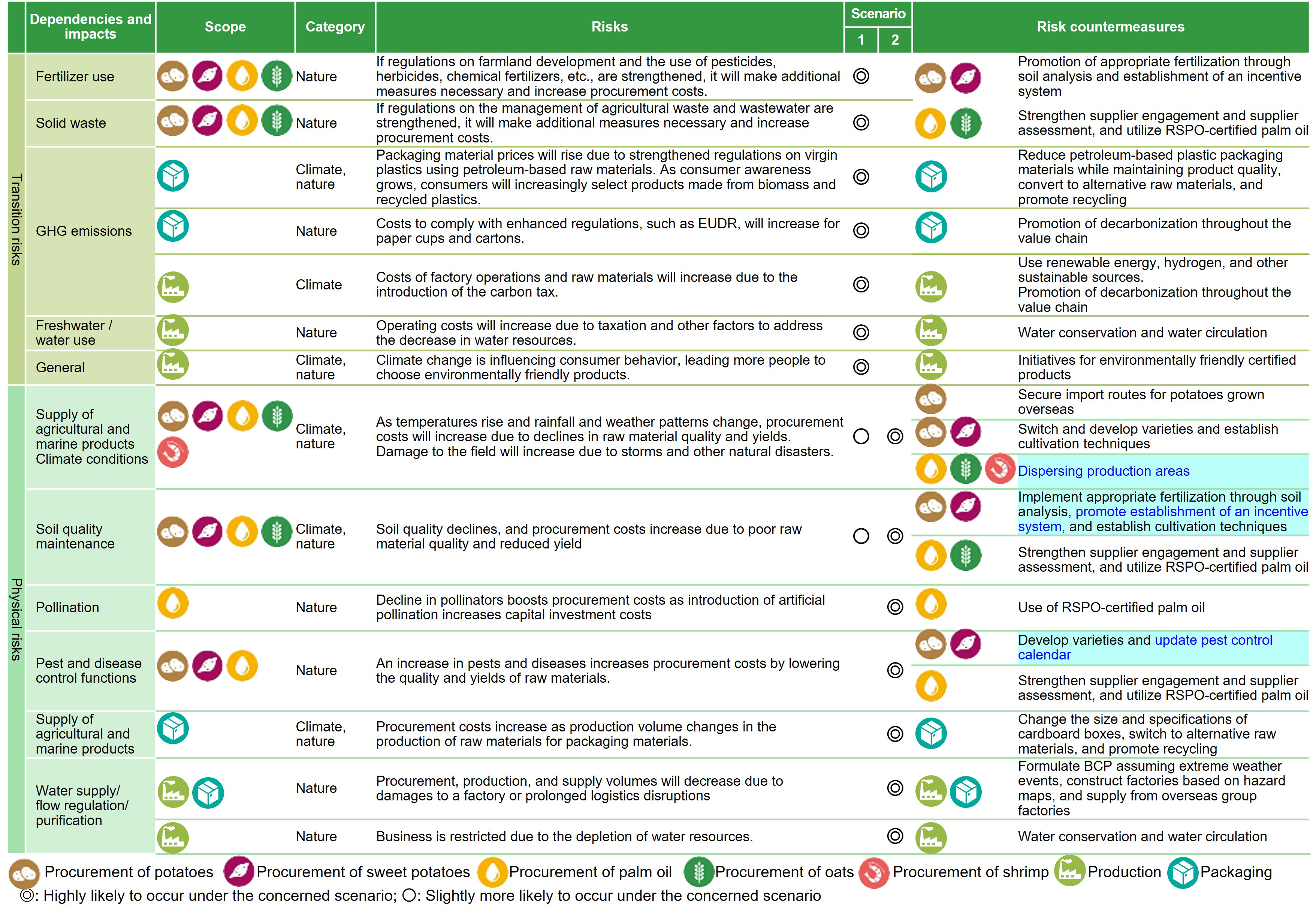
Climate- and Nature-Related Risks
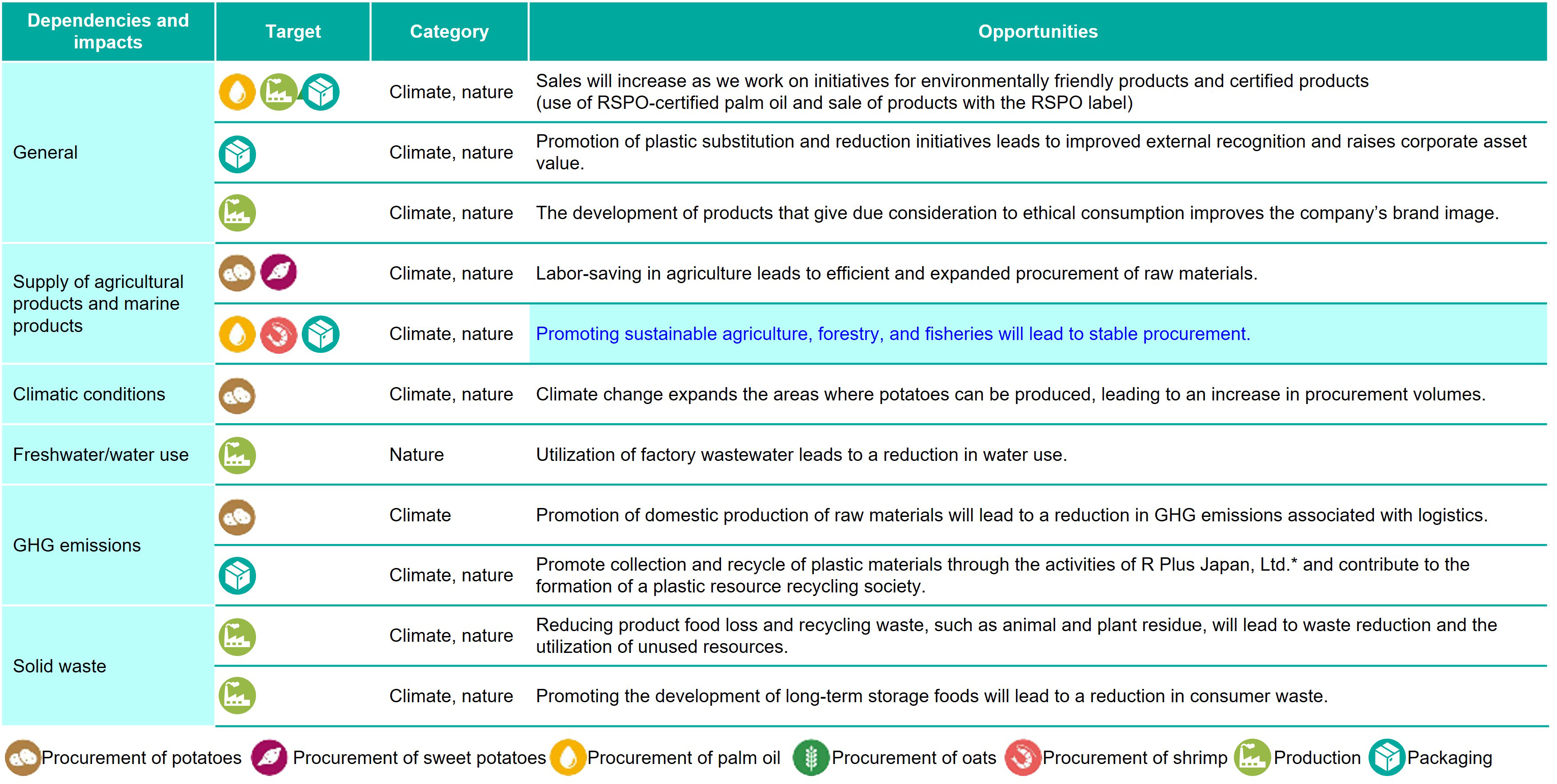
Climate- and Nature-Related Opportunities
Calbee joined the Japan Food and Agriculture Society (JAFAS) in 2025 and has been an active member of its Regenerative Agriculture Working Group. JAFAS is a project that brings together action-oriented stakeholders across the food and agriculture sectors and works from Japan to help address food and agriculture challenges in Asia and around the world. Calbee regards regenerative agriculture as a new opportunity to build on its longstanding efforts to promote sustainable agriculture and expand them into new approaches and activities. We will therefore continue to strengthen these efforts.